If you’ve been thinking about adding a battery to your solar system, 2026 is arguably the most important year to act. The Solar Battery Rebate introduced by the Australian Government has already helped hundreds of thousands of homeowners slash the upfront cost of home battery storage. However, the rebate is changing, and understanding exactly what’s available in your state could save you thousands of dollars.
This guide covers everything you need to know: the federal scheme, state-by-state rebates, eligibility rules, how much you can save, and how to claim your discount without the confusion.
What Is the Solar Battery Rebate in Australia?
The Solar Battery Rebate is a government-backed discount that reduces the upfront cost of installing an eligible home battery system. It is part of the Australian Government’s Cheaper Home Batteries Program, which launched on 1 July 2025 under the expanded Small-scale Renewable Energy Scheme (SRES).
Before the program was introduced, only one in 40 Australian households had a battery connected to their solar system. The high upfront cost was the biggest barrier. Today, that ratio has already improved to one in 24 households, and the number keeps growing.
The program is national and available to households, small businesses, and community organisations across all states and territories. It is not means-tested, which means your income does not affect your eligibility.
Think of it this way: if a 10 kWh battery costs $10,000 installed, the rebate could reduce your out-of-pocket cost to around $7,000. That’s a significant saving-and in some states, you can stack additional incentives on top.
The Federal Government Solar Battery Rebate: How It Works
The federal government solar battery rebate works through a certificate trading system called Small-scale Technology Certificates (STCs). This is the same mechanism that has been used for the solar panel rebate for many years.
When you install an eligible battery, your accredited installer creates STCs based on your battery’s usable capacity. Those certificates are then traded, and the value is passed on to you as an upfront discount on your installation invoice. You don’t need to apply for the rebate separately. Your installer handles everything and simply reduces the price on your quote.
The program is administered by the Clean Energy Regulator (CER) and is available across all Australian jurisdictions. It applies to battery systems with a usable capacity between 5 kWh and 100 kWh, although the rebate itself only applies to the first 50 kWh of usable capacity.
There is no cap on the number of rebates available, but the value does decrease over time. This makes acting sooner a smarter financial decision.
How Much Can You Save with the Australian Solar Battery Rebate?
The amount you save depends on the size of your battery and when you install it.
From January to April 2026, the rebate is calculated at approximately $300 per usable kWh of battery capacity (after administration costs). This means:
- A 10 kWh battery attracts a rebate of approximately $3,000
- A 13.5 kWh battery (such as a Tesla Powerwall 3) saves around $4,050
- A 16 kWh battery can save approximately $4,800
These savings come directly off the price your installer quotes you. No cashback, no waiting-just a lower invoice.
After administration costs and installer fees, the effective rebate sits at roughly $311 per kWh for most installations. The exact figure can vary slightly depending on the current STC market price, which fluctuates around $37 per certificate.
Key Changes to the Solar Battery Rebate from 1 May 2026
This is important news for anyone planning a battery installation. From 1 May 2026, the federal solar battery rebate undergoes significant changes under new regulations.
Here is what is changing:
The flat rate becomes a tiered system. Previously, you earned the same rebate per kWh regardless of battery size. From 1 May, the rate is strongest for the first 14 kWh, then tapers for capacity between 14 kWh and 28 kWh, and reduces further above 28 kWh.
The rebate steps down every six months instead of annually. This reflects falling battery prices and ensures the $7.2 billion program budget lasts until its 2030 end date.
The per-kWh rate drops from ~$300 to ~$244 from 1 May 2026 for the first 14 kWh tier.
Why is this happening? The program proved so popular that over 180,000 batteries were installed in 2025 alone, burning through the original $2.3 billion budget far ahead of schedule. The government responded by expanding the total funding to $7.2 billion but restructuring the rebate to make it more sustainable and equitable.
The practical takeaway is simple: if you’re considering a battery, installing before 1 May 2026 delivers a larger rebate. However, even after May, the rebate remains meaningful, especially for everyday household battery sizes between 10 kWh and 20 kWh.
Who Is Eligible for the Solar Battery Rebate?
The federal solar battery rebate has clear eligibility requirements. Meeting all of them is essential before you sign any contract.
Your battery must be paired with solar panels. Standalone batteries without a connected rooftop solar PV system are not eligible. The solar system can be existing or newly installed.
The battery must be commissioned on or after 1 July 2025. Even if a partial installation happened earlier, the battery must be tested and certified as operational after this date.
Battery capacity must be between 5 kWh and 100 kWh of usable capacity. The rebate applies only to the first 50 kWh.
The system must be VPP-capable. If your battery is connected to the grid, it must be technically capable of connecting to a Virtual Power Plant (VPP). Importantly, you are not required to actually join a VPP; your system just needs to be compatible.
The battery and inverter must be listed on the Clean Energy Council (CEC) approved product list. This ensures the equipment meets Australian safety and quality standards.
Your installer must be accredited by Solar Accreditation Australia (SAA). The accredited installer must also be physically present on-site during installation, setup, and commissioning.
Only one battery rebate per property. If you have multiple properties, each may be eligible separately.
One important note: from 1 March 2026, installers must submit geotagged, time-stamped photos showing compliant labelling as part of the certification process. This is a compliance measure to protect consumers and maintain program integrity.
Solar Battery Rebate NSW: What’s Available in 2026
New South Wales homeowners have access to both the federal rebate and an additional state incentive, making it one of the better states for battery savings.
The NSW Peak Demand Reduction Scheme (PDRS) provides an incentive of up to $1,500 for households and small businesses that install a battery and connect it to a Virtual Power Plant. This incentive was increased from 1 July 2025 and can be combined with the federal battery rebate.
The amount varies depending on the size of your battery and the VPP provider you select. In practice, most NSW households with a typical 10–13 kWh battery can expect a combined saving from both the federal rebate and the PDRS incentive in the range of $4,500 to $6,500 or more.
NSW homeowners may also be able to access low-interest loans through the Empowering Homes Program, which offers finance between $10,000 and $14,000 at below-market rates for solar and battery systems.
Therefore, if you’re in NSW and planning to install a battery, you potentially have three financial tools available: the federal rebate, the VPP incentive, and low-cost finance.
Example: A Sydney homeowner installs a 13 kWh battery before 1 May 2026. They receive approximately $3,900 in federal rebate plus up to $1,500 from the PDRS VPP incentive. Their combined saving could reach $5,400 before any loan assistance.
Solar Battery Rebate QLD: What Queenslanders Need to Know
Queensland homeowners can access the federal Cheaper Home Batteries Program. However, the state’s own Battery Booster program closed in 2024 when its funding was exhausted.
As of April 2026, there is no active Queensland-specific battery rebate on top of the federal scheme. Queenslanders, therefore, rely primarily on the federal solar battery rebate for savings.
The good news is that the federal rebate alone is substantial. A typical 10 kWh battery installation in Brisbane currently results in savings of approximately $3,000 before May 2026, bringing the out-of-pocket cost into a range of $8,000 to $10,000 for a quality system.
Some Queensland energy retailers are also offering VPP participation incentives. These vary by provider, so it’s worth asking your installer or retailer whether any additional VPP incentives apply in your area.
Given that Queensland has strong solar irradiance year-round, a battery paired with solar panels can deliver excellent returns. Payback periods in QLD are typically in the 6 to 9 year range with the right system sizing.
Solar Battery Rebate VIC: The Current Situation in Victoria
Victorian homeowners should be aware of an important update. The Solar Victoria battery rebate program closed in late 2024 after exhausting its funding allocation. The associated interest-free loan also closed at the same time.
As of April 2026, there is no active Victoria-specific battery rebate. Victorians can, however, still access the federal Cheaper Home Batteries Program, which applies nationwide.
Additionally, the Victorian solar panel rebate of up to $1,400 remains available for those installing a new solar system alongside their battery.
Some older websites and guides still reference the Solar Homes battery rebate figures. Always verify directly with the Victorian Government or your installer before making any decisions based on state-specific savings.
The Victorian Energy Upgrades (VEU) program may also provide indirect credits through accredited retailers for certain energy efficiency improvements. Ask your installer whether your system qualifies.
Tip for Victorian homeowners: Even though the state rebate has closed, the federal rebate still reduces a 10 kWh battery installation by around $3,000. Combined with Victoria’s higher electricity tariffs, battery storage can still make strong financial sense.
Solar Battery Rebate SA: What’s Happening in South Australia
South Australia was one of the pioneers of battery rebates in Australia, with its Home Battery Scheme (HBS) offering up to $6,000 off battery installations. However, that program ceased in 2022.
As of 2026, South Australia does not have an active state-specific battery rebate. SA residents access the federal Cheaper Home Batteries Program for their savings.
The silver lining for South Australians is significant: SA has some of the highest electricity prices in Australia, ranging from 34 to 43 cents per kilowatt-hour. This makes the financial case for solar battery storage particularly strong, even without an additional state rebate.
With electricity bills consistently among the highest in the country, SA homeowners who install a battery can expect meaningful reductions in their energy bills. The federal rebate still cuts several thousand dollars from the upfront cost, and the long-term savings from reduced grid electricity consumption can be substantial.
SA residents should also check whether their local council offers any additional incentives, as some councils have partnered with state and federal programs to provide additional support.
Solar Battery Rebate WA: Extra Savings for Western Australians
Western Australia is one of the standout states for solar battery rebates in 2026. WA homeowners can stack the federal rebate with the state’s Residential Battery Scheme, delivering some of the best combined savings in the country.
Synergy customers (metropolitan and some regional areas) can receive an additional rebate of up to $1,300 ($130 per kWh, capped at 10 kWh) when installing a battery connected to an approved Virtual Power Plant.
Horizon Power customers (regional and remote WA) can receive an even larger additional rebate of up to $3,800 ($380 per kWh, capped at 10 kWh). This reflects the higher energy costs and grid challenges faced in remote areas.
VPP participation is mandatory to receive the WA state rebate. However, the benefits are clear: connecting to a VPP allows Synergy or Horizon Power to use a portion of your battery’s capacity during peak demand periods in exchange for financial incentives.
Interest-free loans of up to $10,000 are also available to eligible WA households, further reducing the barrier to entry.
Example: A Perth homeowner installs a 10 kWh battery. They receive approximately $3,000 in federal rebate plus $1,300 from Synergy’s scheme. Their combined saving is $4,300, making the net battery cost considerably more affordable.
Solar Battery Rebate in Other States and Territories (ACT, TAS, NT)
Australian Capital Territory (ACT)
ACT residents can access the federal rebate and also benefit from the ACT Sustainable Household Scheme (SHS), which offers low-interest loans from $2,000 to $15,000 at around 3% for energy improvements, including batteries. Eligible concession card holders can access a zero-interest loan under the Home Energy Support Program. This makes the ACT one of the most financially supportive jurisdictions for battery adoption.
Tasmania
Tasmanians can access the federal solar battery rebate and may also qualify for interest-free loans under the Energy Saver Loan Scheme. Loans of up to $10,000 are available to help with battery and solar investments, repayable over one to three years in fortnightly or monthly instalments.
Northern Territory
The NT’s Home and Business Battery Scheme previously offered grants of up to $6,000, but it reached its funding cap and closed for new applications. NT residents now rely on the federal Cheaper Home Batteries Program for their battery rebate. However, NT has the highest solar radiation of any Australian capital, which makes the financial case for solar and battery storage extremely strong.
Can You Stack Multiple Solar Battery Rebates?
Yes-in some states, you can combine the federal solar battery rebate with state or territory incentives, and this can significantly amplify your savings.
NSW is the clearest example. You can combine the federal rebate with the PDRS VPP incentive for a combined saving that can reach $5,000 to $6,500 or more for a typical battery size.
WA also allows stacking. The Synergy Home Battery Scheme adds up to $1,300 on top of the federal rebate for eligible customers.
ACT residents can pair the federal rebate with the Sustainable Household Scheme’s interest-free loan, which doesn’t increase the cash rebate but significantly improves affordability.
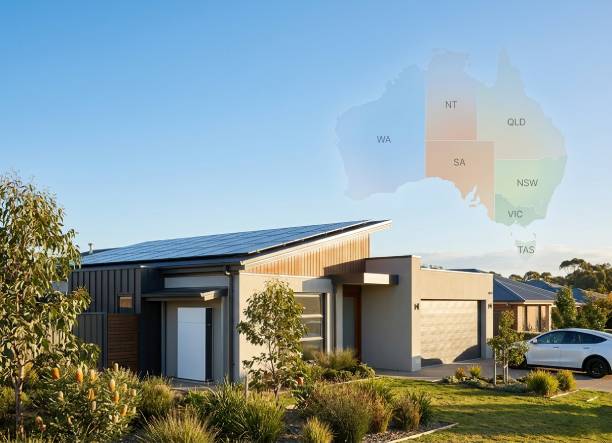
VIC, QLD, SA, TAS, and NT currently only offer the federal scheme, as state-specific battery rebate programs in these regions have closed.
Always verify stackability with your installer and the relevant state government authority before proceeding. Some programs have specific terms around combining incentives, particularly for VPP-connected installations.
How to Claim the Solar Battery Rebate: Step-by-Step
The good news is that claiming the solar battery rebate is straightforward for most homeowners. Your installer does the heavy lifting.
Step 1: Check Your Eligibility
Confirm that your property has a compatible solar PV system (existing or new) and that you meet all the federal program eligibility requirements outlined earlier in this guide.
Step 2: Choose a CEC-Approved Battery
Select a battery from the Clean Energy Council’s approved product list. Popular options include the Tesla Powerwall 3, Sungrow SBR HV, Enphase IQ Battery, and BYD Battery-Box. Your installer can guide you through this.
Step 3: Find an SAA-Accredited Installer
Use the Solar Accreditation Australia website to verify that your chosen installer is accredited for battery work. Your installer must be on-site during commissioning.
Step 4: Get Multiple Quotes
Compare at least three quotes. Ensure each quote clearly shows the rebate being applied as an upfront discount-you should not have to wait for a cashback payment.
Step 5: Review the Contract Carefully
Confirm with your installer whether the quoted price will be honoured if your installation date falls after 1 May 2026. This is especially important given the changing rebate values.
Step 6: Installation and Commissioning
Once installed, the installer submits the required documentation, photos, and certificates to the Clean Energy Regulator. The rebate is already built into your final invoice.
Step 7: Check State Incentives
If you’re in NSW or WA, ask your installer or state government authority about additional state incentives and how to claim them alongside the federal rebate.
Best Solar Batteries Eligible Under the 2026 Rebate
Several popular battery models are currently approved under the Cheaper Home Batteries Program. Here is a brief overview of commonly installed options:
Tesla Powerwall 3 (13.5 kWh usable): One of the most popular choices in Australia, known for its sleek design and built-in inverter. The federal rebate applies to its full usable capacity.
Sungrow SBR HV (available in modular configurations from 9.6 kWh to 25.6 kWh): A highly regarded modular system offering excellent value per kWh. The SBR series is one of the best-selling batteries in Australia in 2025 and 2026.
BYD Battery-Box Premium HVS/HVM (available in various sizes): A trusted brand with strong safety credentials and good warranty terms.
Enphase IQ Battery 5P (5 kWh per unit, stackable): Ideal for smaller homes or those looking to start with a smaller system and expand later.
Alpha ESS Smile Series: A cost-effective option for budget-conscious homeowners seeking reliable storage.
Always confirm your chosen battery appears on the current CEC approved product list before purchasing, as the list is updated regularly.
Is a Solar Battery Worth It in 2026? Real Savings Explained
With the solar battery rebate reducing upfront costs by approximately 30%, the financial case for home battery storage has improved significantly in 2026.
However, whether a battery is “worth it” depends on your energy usage, electricity tariff, and location. Here is a realistic breakdown:
Electricity prices across Australia continue to rise. States like SA (34–43 c/kWh), NSW, and WA have some of the highest tariffs. The higher your electricity rate, the faster your battery pays for itself.
Feed-in tariffs are falling. In most states, the amount electricity retailers pay you for exporting solar energy back to the grid has dropped significantly. This means storing your solar energy in a battery and using it at night is now more valuable than exporting it.
Payback periods for a well-sized battery in states like WA, NSW, QLD, and SA are typically in the 6 to 9 year range with the rebate applied. In Victoria and Tasmania, payback periods can be slightly longer.
Energy independence is another factor many homeowners value. A battery provides backup power during outages and reduces your reliance on the grid.
Consider this example: A Sydney homeowner with a $0.28 feed-in tariff and a $0.32 usage tariff installs a 10 kWh battery for a net cost of $7,000 after the federal rebate and NSW VPP incentive. If the battery saves $1,000 per year in electricity costs, payback is achieved in approximately 7 years, with the battery expected to last 10 to 15 years.
The rebate fundamentally changes the economics. For many Australian households, 2026 is the year battery storage finally makes undeniable financial sense.
Frequently Asked Questions About the Solar Battery Rebate
How much is the solar battery rebate in Australia in 2026?
From January to April 2026, the federal rebate is approximately $300 per usable kWh of battery capacity after administration costs. From 1 May 2026, the rate changes to a tiered structure starting at roughly $244 per kWh for the first 14 kWh. A 10 kWh battery attracts approximately $3,000 in savings before May 2026.
Is the solar battery rebate available to renters?
The federal program itself is not restricted to owner-occupiers, but practically speaking, the landlord typically needs to consent to and arrange the installation. Check with your landlord and a local installer about your specific situation.
Do I need to join a Virtual Power Plant to get the rebate?
No. The federal rebate only requires that your battery is VPP-capable-meaning it can technically connect to a VPP. You are not required to actually enrol in one. However, the NSW and WA state incentives do require active VPP participation.
Can I get the rebate if I already have solar panels?
Yes. Your existing solar system is compatible with the federal battery rebate program, provided your battery meets all other eligibility requirements.
What happens if my installation is delayed past 1 May 2026?
Your rebate value is determined by the date your battery is installed and commissioned-not when you sign the contract or pay. If your installation falls after 1 May, you will receive the lower post-May rebate rate. Confirm this clearly with your installer before signing.
Is the federal solar battery rebate means-tested?
No. The program is not means-tested. Any eligible household, small business, or community organisation can access the discount, regardless of income.
Can I install a battery without solar panels and still get the rebate?
No. The battery must be paired with a rooftop solar PV system. Standalone batteries are not eligible under the current program.
How long will the solar battery rebate program last?
The program is intended to run until the end of 2030. The rebate value will gradually decrease every six months until the scheme concludes.
Disclaimer: Rebate values, eligibility rules, and state programs are subject to change. Always verify current details with the Clean Energy Regulator (cer.gov.au), your state government website, and your accredited installer before making any purchasing decisions.