
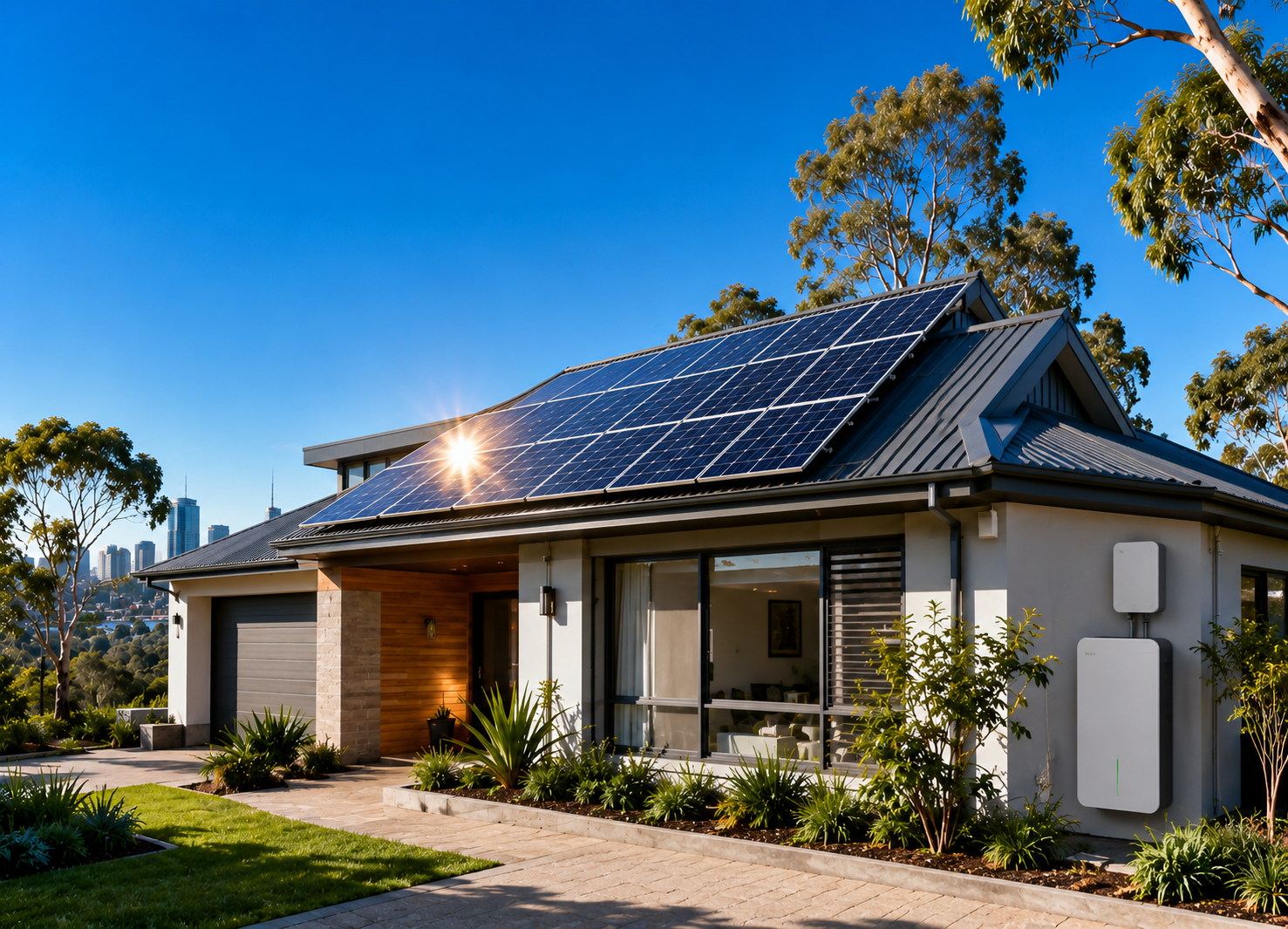
Understanding solar panels cost is the first and most important step for any Australian homeowner thinking about going solar. With electricity bills continuing to rise and government rebates at some of their most generous levels ever, there has never been a better time to consider solar energy. However, prices vary significantly depending on where you live, how big a system you need, and the quality of the components you choose.
In 2026, a standard 6.6kW solar system – the most popular size for Australian homes – typically costs between $5,000 and $8,600 fully installed after government rebates. The simple rule of thumb is to budget around $1,000 per kilowatt installed for a good-quality system. This guide breaks down exactly what you can expect to pay, city by city, system size by system size, so you can make a confident, informed decision.
What Is Included in the Solar Panels Cost?
Before comparing prices, it helps to understand what you are actually paying for. A solar panel installation quote in Australia should always be a complete, installed price, not just the cost of the panels themselves.
A standard residential solar installation includes the solar panels or photovoltaic modules that convert sunlight into electricity, a solar inverter that converts that direct current into usable alternating current for your home, mounting hardware and racking to fix the panels to your roof, all cabling and electrical work, and the labour costs of the installation team.
In most cases, quotes from reputable installers also include grid connection, compliance testing, and the paperwork needed to register for your feed-in tariff. If any of these items are not mentioned in a quote, ask about them before signing anything.
Solar Panels Cost by System Size in Australia (2026)
System size is the biggest single driver of solar panel cost. The larger the system, the more energy it generates, but the higher the upfront investment. Here is what Australians can expect to pay by system size in 2026 after the federal STC rebate has been applied.
A 3kW to 5kW system is suited to smaller households with one or two people and modest electricity consumption. These systems generally cost between $3,500 and $7,000 installed.
A 6.6kW system is by far the most popular size for Australian families. It suits a three or four-bedroom home and generates around 24 to 28 kilowatt-hours per day. Expect to pay between $5,000 and $8,600 for a quality installation, depending on your state and the brand of components chosen.
A 10kW system is ideal for larger homes or households with high electricity usage, such as those running a home office, a swimming pool, or planning to charge an electric vehicle. Prices for a 10kW system typically range from $8,000 to $12,000 fully installed after rebates.
A 13kW or larger system is generally for high-energy users or those wanting to pair solar with a large battery. These systems start at around $11,000 and can exceed $16,000 for premium equipment.
Every dollar you spend on a quality solar system can deliver up to $7 in savings over the system’s lifetime, making the upfront cost well worth considering as an investment rather than an expense.
Solar Panels Cost Calculator: How to Estimate Your Price
Many Australians search for a solar panels cost calculator before reaching out to an installer. While a calculator gives you a helpful ballpark, your actual price will depend on several factors specific to your property.
The best approach is to use the simple formula of $1,000 per kilowatt as your starting point. A 6.6kW system would therefore start at approximately $6,600 before rebates, dropping to around $3,999 to $5,500 after the federal Small-scale Technology Certificates (STC) discount is applied.
Free online tools like the SunSPOT calculator and Solar Choice’s price index let you enter your postcode, electricity bill, and preferred system size to get a more personalised estimate. These tools use real market data and are updated regularly, making them far more accurate than a simple rule of thumb.
However, no calculator replaces an in-person quote from an accredited installer. Factors like your roof angle, shading from trees or neighboring buildings, and your home’s existing switchboard all affect the final price.
Solar Panels Cost in Sydney (NSW)
Sydney homeowners have access to one of Australia’s most competitive solar markets. Average costs for a 6.6kW solar system in Sydney range from $5,500 to $8,000 fully installed, while a 10kW system typically costs between $8,500 and $12,000.
A 5kW system in Sydney is suitable for smaller households and averages $4,500 to $6,500. For high-energy users or those planning to charge an EV at home, a 13kW or larger system starts from $11,000.
NSW residents should note that the state-level solar rebate has ended. Therefore, the federal STC scheme is the primary financial incentive available. NSW does, however, offer an additional rebate of up to $1,500 for connecting a battery to a Virtual Power Plant, which can significantly improve the overall return on investment for those adding storage.
A standard 6.6kW system installed in Sydney produces on average 232,657 kilowatt-hours of electricity over its 25-year lifetime, at an effective cost of just 4.1 cents per kilowatt-hour. Given that grid electricity in Sydney currently costs around 36 cents per kilowatt-hour, the long-term savings are substantial.
Solar Panels Cost in Melbourne (VIC)
Melbourne homeowners can expect to pay between $5,250 and $8,900 for a standard 6.6kW solar system, with premium panels and components pushing the price to $6,800 to $11,000. A 10kW system in Melbourne typically runs between $7,900 and $12,600.
Solar prices in Melbourne have actually decreased slightly in 2026, down approximately 1.3% from the previous quarter, as panel costs continue to fall and market competition increases. Inner-city areas tend to have higher installation rates due to demand and access constraints, while outer suburbs and growth corridors are generally more competitive.
Victoria’s Solar Homes Program still provides a rebate of up to $1,400 for eligible households installing solar panels, and this stacks on top of the federal STC discount. Households earning under $210,000 combined income may qualify for this additional incentive, which makes Melbourne one of the better states for solar financial returns.
Melbourne’s variable weather is often raised as a concern, but a well-sized system still performs strongly across all four seasons. In summer, long daylight hours deliver maximum generation. In winter, shorter days are offset by Victoria’s feed-in tariff, which sits at a minimum of 4.9 cents per kilowatt-hour in 2026.
Solar Panels Cost in Brisbane (QLD)
Brisbane and Queensland represent one of Australia’s most competitive and solar-abundant markets. Average costs for a 6kW system in Brisbane are around $5,570, and Queensland’s excellent sunshine hours mean systems deliver among the highest energy yields in the country.
Brisbane sits in STC Zone 3, which means homeowners receive a solid STC rebate on installation. Areas north of Rockhampton fall into Zone 2, which attracts even higher STC values and therefore lower net system costs. This geographic advantage is worth factoring in when comparing Brisbane solar costs against other cities.
Queensland no longer has a state battery rebate program, as the Queensland Battery Booster program closed in 2024. However, the federal STC rebate and the Cheaper Home Batteries Program remain available to all Queensland households.
Buyers in South East Queensland should also be aware of Energex dynamic export limits before sizing their system, as this can affect how much excess solar energy you can send back to the grid during peak hours.
Solar Panels Cost in Other Major Cities
Perth (WA): A 5kW system in Western Australia averages approximately $4,399 after rebates, making it one of the more affordable markets in Australia. WA households also benefit from the Synergy and Horizon Power battery rebates that stack with the federal program for those adding storage.
Adelaide (SA): Solar panel installation in Adelaide follows national average pricing, but South Australia has some of the strictest export limits in Australia. Many SA networks impose zero or very low export limits during peak solar hours, so homeowners should design their system around self-consumption rather than grid export. The City of Adelaide does offer additional rebates for concession card holders, with up to $1,000 off systems between 1.5kW and 10kW.
Hobart (TAS): Hobart sits at the higher end of the national pricing scale. A 6.6kW system in Hobart averages around $7,200 before rebates, partly due to Tasmania’s lower solar rating compared to mainland capitals. However, the federal STC rebate still applies and reduces upfront costs meaningfully.
What Affects the Solar Panels Cost?
Several factors influence the final price you pay for a solar installation. Understanding these helps you compare quotes more effectively and avoid paying more than necessary.
Panel brand and quality: Budget panels from brands like Jinko, Trina, or Seraphim typically retail between $80 and $150 each, while premium options like SunPower, REC, and the Australian-made Tindo can cost $250 to $300 or more per panel. A budget-friendly panel like Jinko might cost around $130 per panel, whereas a premium SunPower panel could exceed $290. For a full 10kW setup, that difference in panel choice alone can add around $3,600 to your total system cost.
Inverter type: String inverters are the most common and most affordable option for standard installations. Microinverters cost more but are the better choice for roofs with partial shading, as each panel operates independently. Hybrid inverters, which allow battery storage to be added later, sit in the mid-price range.
Roof complexity: A simple, unshaded, north-facing metal roof is the cheapest to work on. Tile roofs require additional mounting hardware. Steep or multi-storey roofs demand more labour and safety equipment, which adds to the installation cost.
Switchboard upgrades: Older Australian homes sometimes have switchboards that need upgrading before a solar system can be safely connected. This can add several hundred to over a thousand dollars to the project.
Installer quality and warranty terms: Cheaper quotes often come with shorter workmanship warranties and less experienced installers. A $22,000 commercial quote with a 5-year workmanship warranty will almost certainly cost more over 25 years than a $28,000 quote with quality components and a 10-year workmanship warranty.
Solar Panels Cost and Government Rebates in Australia
Government incentives play a major role in making solar affordable for Australian homeowners. The primary scheme is the Small-scale Technology Certificates (STC) program, which provides an upfront point-of-sale discount on every new solar installation.
In 2026, a standard 6.6kW system will typically attract an STC discount of around $1,600 to $1,900, while a 10kW system may attract a rebate of approximately $2,500. These savings are applied directly by your installer, so the price you are quoted should already include the STC discount.
It is important to note that the STC scheme steps down annually and is scheduled to end in 2030. This means every year you wait, the rebate reduces slightly and the net cost of going solar increases. Acting sooner rather than later locks in better value.
For homeowners also interested in adding battery storage, the federal Cheaper Home Batteries Program, which began on 1 July 2025, provides a further discount of approximately $372 per usable kilowatt-hour, effectively reducing a 10kWh battery cost by around $3,720.
Solar Panels Cost vs Long-Term Savings
One of the most important ways to evaluate solar panels cost is to look beyond the sticker price and consider the lifetime return on investment.
A typical 6.6kW system installed in Australia today produces electricity at an effective cost of around 4 cents per kilowatt-hour over its 25-year lifespan. Grid electricity currently costs between 30 and 45 cents per kilowatt-hour depending on your location and time of use. That difference represents an enormous ongoing saving for every household that goes solar.
The average payback period for a residential solar system in Australia is currently between 3.5 and 6 years, depending on electricity usage, location, and feed-in tariff. After the payback period, the system generates effectively free electricity for another 20 years or more.
To put that into numbers: a quality 6.6kW system saving $1,200 to $2,000 per year on electricity bills will recover its upfront cost of $6,000 to $8,500 within four to seven years. That leaves roughly 18 to 21 years of near-zero electricity costs during daylight hours.
Commercial Solar Panels Cost in Australia
Businesses face different energy demands from households, and commercial solar panel cost reflects that. The average cost of a commercial solar system in Australia ranges between $850 and $1,300 per kilowatt installed, including panels, inverter, mounting hardware, labour, and electrical components.
Smaller business systems in the 20kW to 30kW range typically cost between $900 and $1,200 per kilowatt. Larger industrial installations of 250kW or more benefit from economies of scale and can drop to $650 to $850 per kilowatt. A 30kW commercial system, for example, typically costs $22,000 to $32,000 fully installed after STC rebates.
The payback period for commercial solar is generally shorter than for residential installations because businesses consume a higher proportion of their solar generation on site during business hours. A cafe, office, or warehouse operating from 7am to 5pm can self-consume almost everything its panels produce.
For a business paying 30 to 40 cents per kilowatt-hour on a commercial tariff and self-consuming 70% or more of its solar generation, payback is typically three to four years.For a 30kW system saving $8,000 per year on electricity, the total lifetime savings over 25 years come to roughly $160,000 to $200,000 on a $27,000 investment. That is a compelling financial case for any business owner.
Bird Proofing Solar Panels Cost in Australia
Once your solar panels are installed, one ongoing maintenance consideration that catches many homeowners by surprise is bird proofing. Pigeons and other birds frequently nest under solar panels because the space offers shelter from weather and predators.
Bird droppings are acidic and can corrode panel surfaces, reduce electricity output by blocking sunlight, and create ongoing cleaning costs. Nesting debris can also block gutters and cause moisture damage to your roof.
The cost of solar panel bird proofing in Australia typically ranges between $500 and $2,000, depending on the size of your solar system and the complexity of your roof. Most professional installers price bird proofing based on the perimeter of the solar array rather than the number of panels, with rates commonly falling between $17 and $30 per metre of perimeter.
In Sydney, bird proofing costs align with the national range of $500 to $2,000. In Brisbane and across Queensland, where pigeon problems are especially common, the same range applies. For a small, single-storey home with easy roof access and a compact system, costs often fall between $500 and $700. Larger systems on steep or multi-storey roofs can approach or exceed $2,000.
The most common and effective solution is solar mesh, a UV-stabilised PVC-coated or stainless steel barrier installed around the perimeter of the panels using non-invasive clips that do not require drilling into the panel frames. When installed correctly by a professional, solar mesh does not void your panel warranty and provides a long-term, permanent barrier.
Many professional installers also include a thorough cleaning of the roof area under the panels as part of the bird proofing service, removing existing nests, droppings, and debris before installing the mesh. Compared to the cost of repairing panel damage or replacing corroded components, bird proofing is a worthwhile and relatively modest investment.
How to Choose a Solar Installer in Australia
Finding the right installer is just as important as choosing the right panels. A quality installation maximises your system’s energy output and ensures your warranty remains valid.
Always look for an installer who is accredited by the Clean Energy Council (CEC). CEC accreditation means the installer has met the national standard for solar installation competence and safety. Most reputable installers will also only quote components listed on the Clean Energy Council’s approved products list.
When comparing quotes, make sure each one specifies the exact panel make and model rather than a generic “Tier 1 panels” description. The quote should also clearly list the inverter brand and model, total system capacity in kilowatts, whether switchboard upgrades are included or excluded, and the warranty terms for panels, inverter, and workmanship separately.
Getting at least three quotes is recommended before making a decision. A price difference of $1,000 to $2,000 between quotes is normal and often reflects a difference in equipment quality or workmanship warranty length, not just profit margin. The cheapest quote is rarely the best value over the life of a 25-year system.
Is Solar Worth the Cost in Australia in 2026?
For the vast majority of Australian homeowners, yes. Solar panels are worth the cost in 2026, and the financial case is stronger than it has been at any point in the technology’s history.
The market has matured significantly. Panel prices have fallen by approximately 15% from 2025, and quality has improved substantially. Premium systems now carry 25-year performance warranties and are designed to last well beyond that. The federal STC rebate, while stepping down annually, still represents a meaningful discount at the point of sale.
Also, the combination of rising grid electricity prices, low feed-in tariffs, and generous battery rebates means the smartest strategy for most households in 2026 is to size the solar system to cover daytime usage and self-consumption, then add battery storage to capture excess solar energy for evening use.
Every dollar spent on solar panels today can deliver up to $7 in savings over the system’s lifetime, making it one of the highest-return home improvements available to Australian homeowners.
Conclusion
Solar panels cost in Australia in 2026 has never been more transparent or more competitive. A quality 6.6kW system costs between $5,000 and $8,600 fully installed after rebates, delivers electricity at around 4 cents per kilowatt-hour over its lifetime, and pays for itself in as little as three to six years.
Whether you are in Sydney, Melbourne, Brisbane, Perth, or anywhere in between, the financial case for residential solar is compelling. Rising grid electricity prices, a mature installer market, and ongoing government incentives all point in the same direction: now is a very good time to go solar.
If you are also considering adding bird proofing to protect your investment, budget an additional $500 to $2,000 depending on your system size. And if you want to maximise your solar returns, explore adding a battery under the federal Cheaper Home Batteries Program, which provides an additional rebate of approximately $3,720 on a 10kWh system.
Ready to get started? Contact an accredited solar installer today and take the first step toward lower electricity bills and greater energy independence.
Frequently Asked Questions
How much do solar panels cost for an average Australian home?
For an average three or four-bedroom Australian home, a 6.6kW system is the standard recommendation. In 2026, this costs between $5,000 and $8,600 fully installed after the federal STC rebate, depending on your state, roof type, and panel quality.
Are solar panels cheaper in some states than others?
Yes. Queensland, Western Australia, and parts of regional New South Wales tend to offer more competitive pricing due to higher installer density and strong solar resources. Tasmania and remote areas generally sit at the higher end of the scale due to labour costs and lower STC zone ratings.
How long until solar panels pay for themselves?
The average payback period for a residential solar system in Australia is currently between 3.5 and 6 years. After that, your system generates effectively free electricity for the remaining 20-plus years of its life.
Do solar panels add value to my home?
Yes. Research consistently shows that solar panels increase property values in Australia. Buyers actively seek homes with solar installed, particularly in states where electricity prices are high and grid reliability is a concern.
Can I claim a solar rebate in 2026?
Yes. The federal Small-scale Technology Certificates scheme applies to all eligible solar installations across Australia in 2026. The rebate is applied at the point of sale, so you do not need to claim it separately. Some states also offer additional incentives that can be stacked on top of the federal discount.
What is the cheapest solar panel system available in Australia?
Small systems from 3kW to 5kW using budget-tier panels can be found for as low as $3,500 installed after rebates. However, cheaper systems often come with shorter warranties and lower-quality components. A modest increase in budget for a mid-range system typically delivers far better long-term value.
1 thought on “How Much Do Solar Panels Cost in Australia? 2026 Pricing Guide”
Comments are closed.